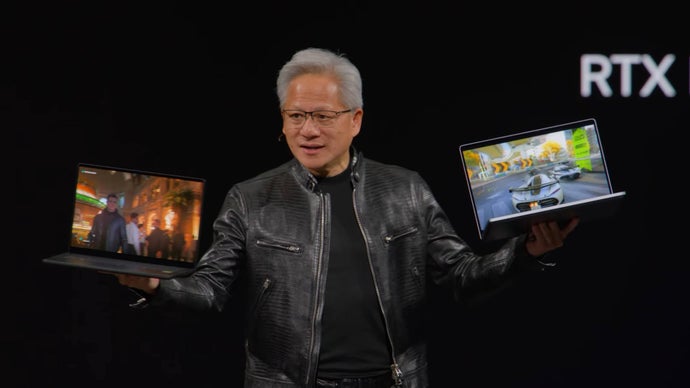
Nvidia has officially declared its entry into the CPU sector with the launch of RTX Spark, a fully integrated System on a Chip (SoC) aimed at slim and lightweight laptops, scheduled for release this fall. This decision follows years of speculation regarding Nvidia’s potential move into CPU production.
The RTX Spark is particularly geared towards agentic AI tasks, in line with Nvidia’s considerable investments in AI technology. Although the official descriptions of its AI functionalities are somewhat unclear, the SoC promises to offer sophisticated AI processing capabilities.
For gamers, the RTX Spark is a thrilling innovation. The SoC’s graphics processor is derived from Nvidia’s Blackwell architecture, the same tech that powers the GeForce RTX 50 series graphics cards. This indicates that laptops featuring RTX Spark will support functionalities such as DLSS 4.5 upscaling, Multi-Frame Generation, ray tracing, Reflex, and G-Sync. These features, usually linked to high-end standalone graphics cards, are now accessible on integrated graphics, representing a notable advancement in laptop gaming performance.
The incorporation of top-tier graphics features into a single chip is unparalleled in the sphere of integrated graphics, aside from the Nintendo Switch 2, which is not typically compared to conventional laptops.
In summary, the RTX Spark signifies a considerable advancement for Nvidia, merging potent AI processing with state-of-the-art gaming attributes in a compact, energy-efficient format suitable for contemporary laptops. As Nvidia navigates into the CPU market, the RTX Spark is set to transform the capabilities of thin and light laptops, providing users with a combination of performance and portability.