**Deadpool: The Merc with a Mouth and a Meta Twist**
Deadpool, also referred to as Wade Wilson, stands out as one of Marvel’s most atypical characters. Similar to Wolverine, he boasts a remarkable healing factor that enables him to recuperate from any injury, regardless of its severity. Nevertheless, what truly distinguishes Deadpool is his distinctive recognition of his fictional nature. This self-recognition, often termed as “breaking the fourth wall,” permits Deadpool to consistently allude to the fact that he is a character within a comic book, film, or video game.
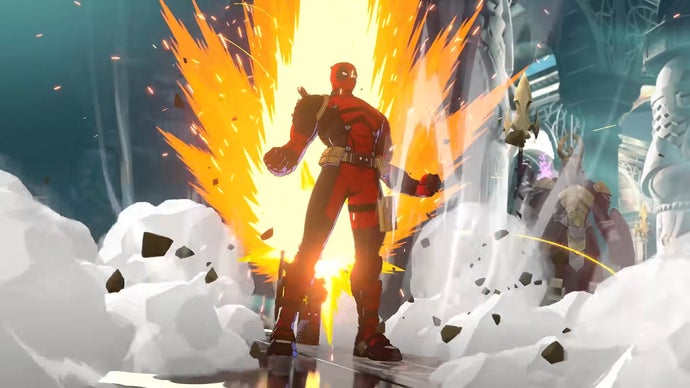
This meta-recognition is a fundamental characteristic of Deadpool’s persona and has been examined across various forms of media. In the gaming sphere, “Marvel Tōkon: Fighting Souls” cleverly integrates this feature of Deadpool’s personality. Unlike other representations where his incessant banter may become tiresome, this game successfully balances his humor with a reverence for the character’s intricacies.
Deadpool’s inclination to reference everything around him, from Marvel’s editorial choices to real-life celebrity drama, positions him as a distinctive figure within the Marvel Universe. His capacity to comment on and engage with the surrounding world adds a dimension of depth to his character, rendering him both unpredictable and amusing.
This trait became a pivotal aspect of Deadpool’s identity in his comic series and non-comic appearances. The 2013 “Deadpool” game created by High Moon Studios and Ryan Reynolds’ depiction in the 2016 film serve as prime illustrations of how this meta element has been adopted, providing fans with a version of Deadpool that is both authentic to the comics and refreshingly novel.
In summary, Deadpool’s meta-recognition and tendency to break the fourth wall render him a remarkable character in the Marvel Universe. His ability to merge humor with action, all while acknowledging his fictional essence, guarantees that he remains a cherished and enduring figure in popular culture.