**Investigating the Influence of Video Game Camera Perspectives: A Case Analysis of Baldur’s Gate 3**
Video game cameras serve as a vital component of the gaming experience, often igniting discussions among both players and developers. An inadequately crafted camera can result in confusion or even motion sickness, greatly influencing player satisfaction. Yet, beyond these issues lies a captivating dialogue regarding the deliberate decisions behind camera angles and placements in games, and how these choices enhance the overall design and experience envisioned by the developers.
In numerous games, the camera angle transcends mere technicality and becomes a narrative instrument that molds the player’s viewpoint and immersion. For example, a first-person perspective can instill a feeling of immediacy and personal engagement, while a third-person viewpoint may provide a wider scope of the surroundings, improving strategic planning and spatial awareness.
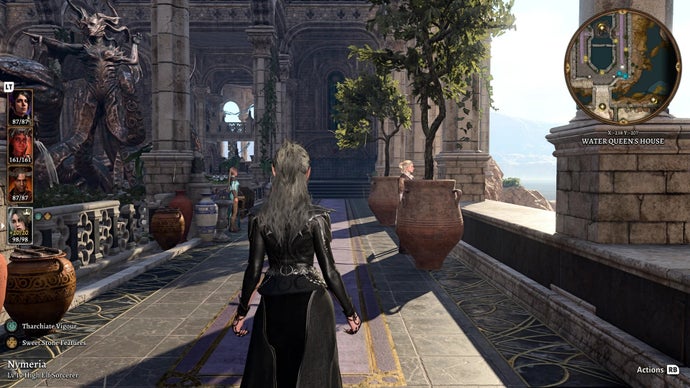
Baldur’s Gate 3, a role-playing game celebrated for its intricate storytelling and tactical gameplay, typically utilizes an isometric camera angle. This viewpoint enables players to assess the battlefield and devise their strategies with accuracy, in line with the game’s tactical essence. However, a recent mod introduces an authentic third-person camera, presenting a novel way to engage with the game.
This mod alters the player’s perspective, offering a more personal and immersive experience similar to action-adventure games. Although this might stray from the initial design goals, it reveals new avenues for players to connect with the game world. The third-person view can deepen character interactions and environmental exploration, providing an additional dimension of narrative involvement.
The emergence of such mods underscores the adaptability and inventiveness within the gaming community, allowing players to customize their experiences. It also prompts inquiries about the equilibrium between developer intentions and player autonomy. While some purists may contend that modifying the camera angle disrupts the intended experience, others value the chance to view familiar realms from alternative angles.
In conclusion, the selection of camera angle in video games represents a multifaceted choice that influences gameplay, storytelling, and player immersion. As demonstrated with Baldur’s Gate 3, experimenting with diverse perspectives can yield new insights and experiences, enriching the gaming landscape. Whether adhering to the original design or welcoming modifications, the conversation surrounding video game cameras remains a compelling facet of game development and player interaction.