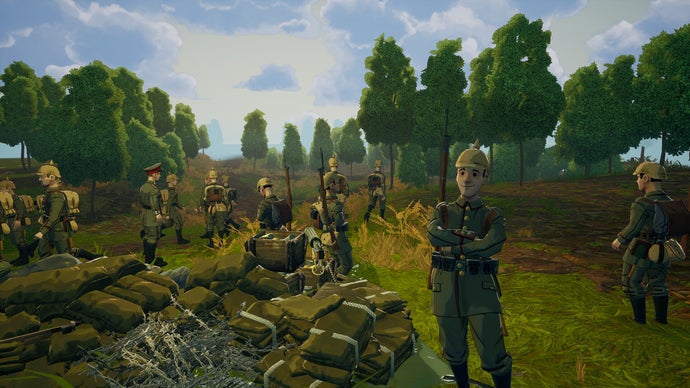
**The Progression of War-Focused Games: “Dig In” and the Idea of a WW1 Trench Warfare Colony Simulation**
In the constantly changing realm of video gaming, developers relentlessly push the limits of genres and storytelling, frequently merging elements to craft distinctive experiences. One notable instance is “Dig In” from the Icelandic studio Vitar Games, which has ignited interest and discussion by branding itself as a “WW1 trench warfare colony sim.” This classification contests conventional views of both historical and simulation games, providing a new angle on a thoroughly examined topic.
Conventionally, games set in World War I have concentrated on the harsh truths of trench warfare, highlighting strategy, survival, and the grim aspects of conflict. Nevertheless, by incorporating the notion of a “colony sim,” “Dig In” encourages players to interact with the subject matter in an inventive manner. This strategy implies a transition from simple survival to a more intricate engagement with the setting and resources, similar to managing a community or settlement amidst a war-ravaged environment.
The use of the term “colony” in this scenario is especially thought-provoking. Traditionally, colonies evoke thoughts of expansion, settlement, and frequently exploitation, which stands in stark contrast to the devastation and stagnation of the WW1 trenches. This contrast prompts inquiries about the commercialization of historical occurrences and the artistic freedoms taken in their portrayal. It urges players to reassess the narratives and mechanics typically linked to war games.
Additionally, the game’s identification as a “colony sim” paves the way for new genre possibilities, such as “WW1 life simulations” or even “cozy WW1” games. These potential genres propose an emphasis on the everyday lives of soldiers, their relationships, and the upkeep of morale and resources, rather than solely on warfare. This transformation could allow for a more intricate examination of human experiences during wartime, underscoring aspects frequently overshadowed by a focus on combat and strategy.
The fusion of genres in “Dig In” exemplifies the creative opportunities within the gaming sector. It mirrors a broader tendency to reinterpret historical events through inventive gameplay mechanics, presenting players with novel methods to engage with and reflect on history. While some may perceive the concept as startling or even disrespectful, it undoubtedly adds to the ongoing dialogue regarding the role of video games in interpreting and portraying history.
In summary, “Dig In” illustrates the vibrant nature of video game design, where limits are perpetually challenged, and fresh genres materialize. By reframing WW1 trench warfare as a colony simulation, Vitar Games not only confronts players’ anticipations but also enhances the conversation on how we engage with and comprehend historical narratives through gaming.