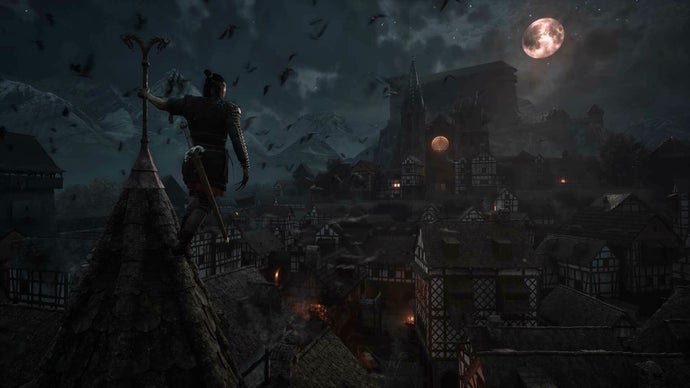
In recent times, the gaming sector has increasingly emphasized profitability at the expense of creativity, a trend that has ignited considerable discussion among both developers and players. The concentration on financial success frequently eclipses the artistic and inventive elements of game creation, resulting in a scenario where a game’s quality may take a backseat to its revenue-generating potential. This change in focus is apparent in the tactics used by major game companies, where creating blockbuster games that ensure substantial sales figures takes precedence, often sacrificing originality and artistic flair.
Konrad Tomaszkiewicz, recognized for his contributions to “The Witcher 3” and the forthcoming “The Blood of Dawnwalker,” has expressed his concerns regarding this dominant attitude. During a recent interview, Tomaszkiewicz underscored the obstacles developers encounter when trying to craft meaningful and immersive experiences in an industry heavily influenced by financial factors. He contends that the incessant quest for profit can hinder creativity, as developers face pressure to adhere to market trends and deliver content that appeals to the widest audience possible.
Tomaszkiewicz’s viewpoint illuminates the internal struggles within game studios, where creative teams frequently find themselves at odds with executives focused on profitability. This friction can result in compromises in game design, where groundbreaking ideas are sidelined in favor of safer, more commercially appealing choices. Consequently, the gaming industry risks becoming uniform, with an abundance of sequels, remakes, and formulaic games that emphasize commercial success over artistic value.
Despite these obstacles, a rising movement within the industry advocates for a revival of creativity and innovation. Independent developers and smaller studios are spearheading this effort, creating games that emphasize storytelling, distinctive gameplay mechanics, and artistic expression. These developers often operate beyond the limitations imposed by major publishers, granting them the freedom to take risks and investigate fresh concepts without the burden of achieving financial benchmarks.
The triumph of these independent games showcases that a demand exists for titles that prioritize creativity over profit. Players are progressively searching for experiences that offer something novel and distinctive, rather than repeated content. This evolution in consumer preferences could encourage larger studios to reassess their priorities and invest in a broader range of innovative ventures.
In summary, while the gaming industry is presently influenced by a profit-centric attitude, there is optimism for a more balanced approach that appreciates both financial achievement and creative expression. Developers like Konrad Tomaszkiewicz continue to champion the significance of artistry in game design, and their endeavors, coupled with the success of independent studios, may pave the way for a new era of innovation within the industry.