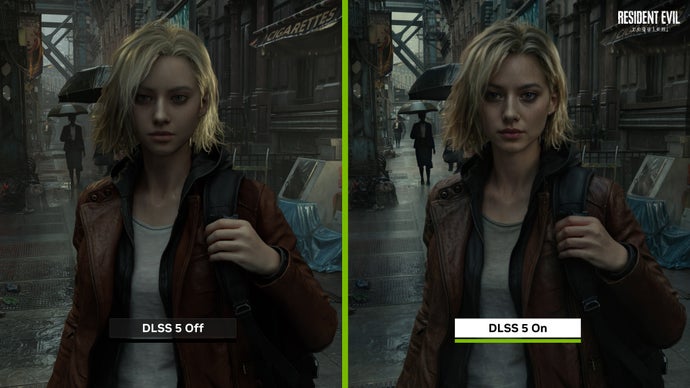
Nvidia’s recent unveiling of DLSS 5 has captivated the gaming community, presenting an innovative feature that surpasses conventional upscaling and frame generation. This newest version of Deep Learning Super Sampling (DLSS) centers on a “real-time neural rendering model” aimed at improving visual fidelity by integrating pixels with lifelike lighting and materials. The technology is set to revolutionize the visual experience of gaming, providing a fresh level of realism and immersion.
A particularly noteworthy element of DLSS 5 is its capability to dramatically alter the look of characters within games. For example, in “Resident Evil Requiem,” the character Grace experiences a striking transformation, taking on traits akin to a Hollywood actress. Likewise, in “Starfield,” the technology has been remarked upon for notably lightening the skin tones of characters of color, igniting discussions concerning representation and the ethical considerations surrounding such changes.
Expected to debut this fall, DLSS 5 is ready to reshape the visual framework of gaming. Its AI-enhanced features are projected to attract gamers who appreciate a cohesive aesthetic throughout their preferred titles, similar to the stylized visuals found in popular online promotions. As the industry awaits the release, discussions persist regarding the possible effects of DLSS 5 on gaming culture and the wider ramifications of AI in creative media.