**The Significance of Vibe in Gaming: A Theory**
Within the vast realm of video games, where visuals, mechanics, and narratives often dominate the spotlight, there exists a frequently underestimated yet vital aspect: the Vibe. This notion, with its elusive essence, surpasses conventional game design elements, establishing itself as the most crucial factor in captivating and sustaining a player’s attention. The Vibe, defined by its capacity to spark curiosity and engagement, forms the bedrock upon which unforgettable gaming experiences are constructed.
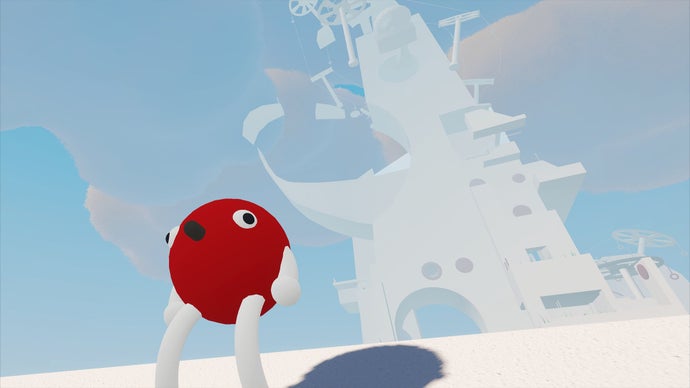
The Vibe is not limited to a particular aesthetic or genre; instead, it embodies an intangible quality that elicits the sentiment, “now what’s this, then?” It serves as the initial ignition that entices players into a game, encouraging them to delve deeper. This theory is highlighted by “Big Stretch,” a game jam physics-based platformer that, despite its simplistic assets, enchants players through its distinctive charm and captivating mechanics.
In a world governed by algorithms where predictability often prevails, the Vibe presents a refreshing contrast. It is not a foolproof recipe for triumph, but it stands as the most essential launching pad for developing games that resonate with audiences. The Vibe’s strength resides in its capacity to surpass typical expectations, providing players with an experience that feels both fresh and fascinating.
Ultimately, although a robust Vibe by itself does not guarantee a game’s triumph, it serves as the foundation of a compelling gaming experience. It is the component that encourages players to immerse themselves in a realm, to investigate its intricacies, and to invest in its storyline. Consequently, the Vibe remains a critical consideration for developers aiming to create games that differentiate themselves in a saturated market.